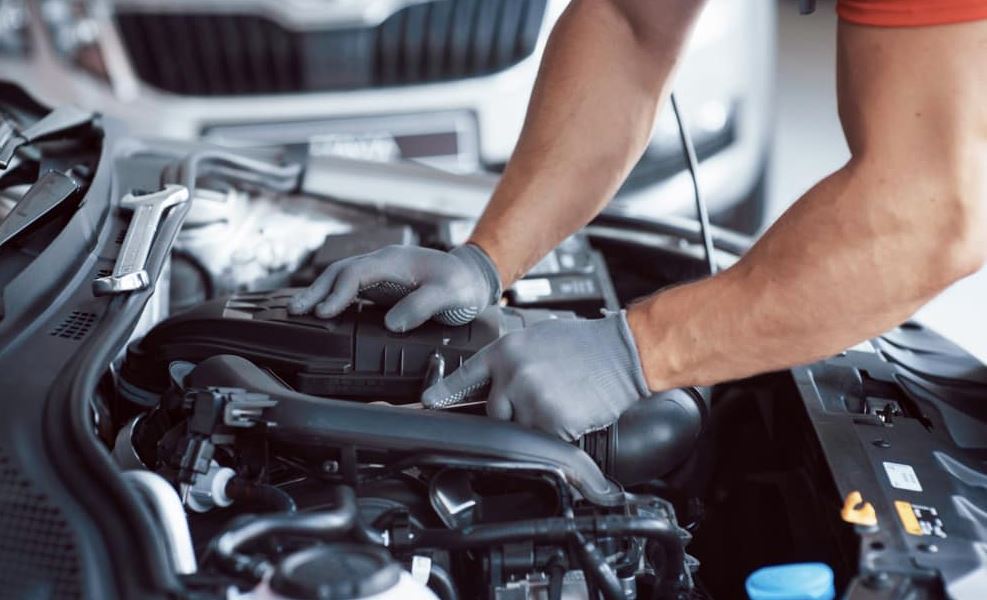
When a mechanic tells you your car needs a specific repair, it can sometimes feel difficult to assess whether it's genuinely necessary or how urgent it is — especially if you're not particularly familiar with how cars work. This article aims to demystify some of the most common repairs, explain what they involve, and give you a clearer sense of when they matter.
We're not going to oversimplify, but we'll keep it practical. The goal is to help you have a more informed conversation with whoever services your vehicle.
Brake System Repairs
Brakes are arguably the most safety-critical system on your vehicle. Most brake-related repairs fall into a few common categories:
Brake Pad Replacement
Brake pads are the friction material that clamps against the brake disc to slow the vehicle. They wear down gradually over time — typically lasting between 25,000 and 60,000 miles depending on driving style and vehicle weight. Signs of worn pads include a high-pitched squealing when braking (a wear indicator built into most pads), a grinding noise, or a longer stopping distance. Replacing pads before they wear fully protects the disc from damage.
Brake Disc Replacement
Brake discs (rotors) are the metal plates the pads clamp against. They wear down more slowly than pads, but can develop grooves, warping, or corrosion over time. Warped discs typically cause a pulsing sensation through the brake pedal. Discs are generally replaced in pairs (both front or both rear) to maintain balanced braking.
Brake Caliper Issues
Calipers apply the clamping force to the pads. They can seize over time, particularly on older vehicles or those left standing for extended periods. A seized caliper can cause uneven braking, pulling to one side, or a burning smell due to constant friction. Caliper repair or replacement is less common than pad or disc work, but not unusual on higher-mileage vehicles.
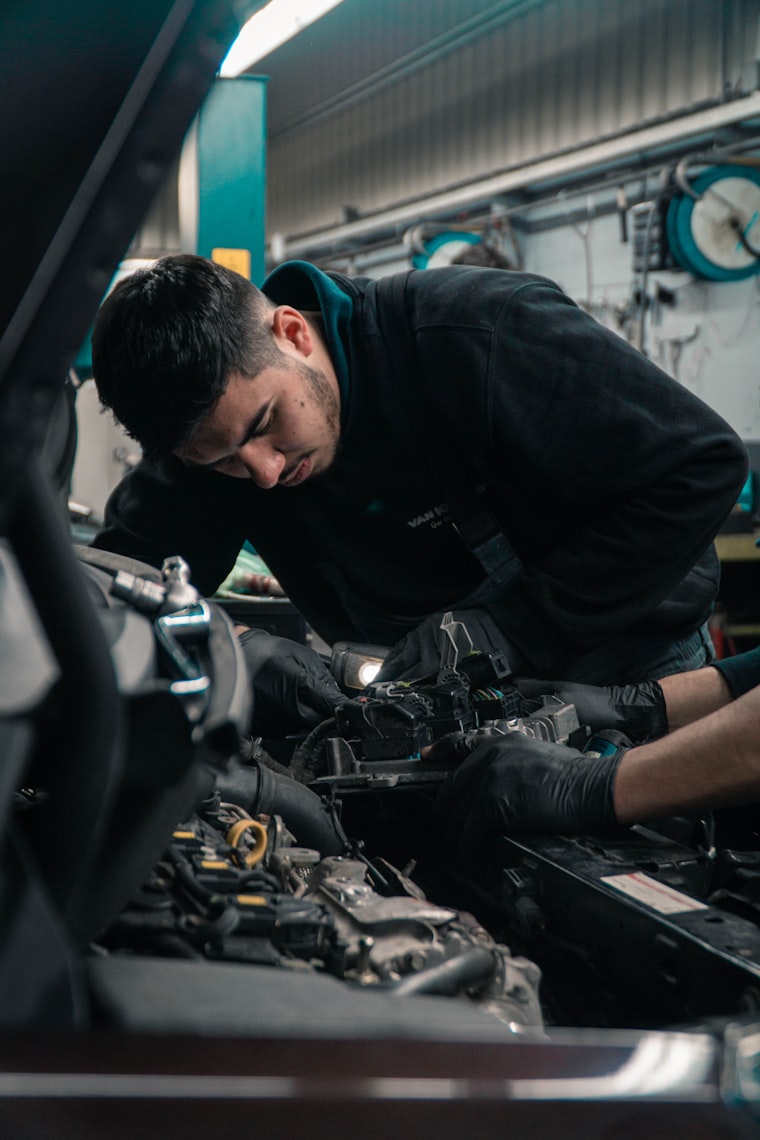
Engine Diagnostics and Warning Lights
The engine warning light (often called the malfunction indicator light or MIL) is one of the most misunderstood aspects of modern car ownership. It can mean anything from a loose fuel cap to a significant engine issue — and it's not possible to know which without connecting a diagnostic device to the vehicle's OBD (on-board diagnostics) port.
Common reasons for an engine warning light include:
- Oxygen sensor fault — affects fuel mixture calculation and efficiency
- Catalytic converter inefficiency — often a downstream effect of other issues
- Mass airflow sensor fault — affects how the engine meters incoming air
- Spark plug or ignition coil misfire — causes rough running, hesitation
- Loose or faulty fuel cap — simpler than it sounds, but genuine
- EGR (exhaust gas recirculation) valve faults
"A steady engine warning light is worth investigating, but it doesn't usually require you to stop immediately. A flashing engine light is more serious — it typically indicates an active misfire that can damage the catalytic converter, and you should reduce speed and have it checked soon."
Suspension and Steering
Your car's suspension keeps the tyres in contact with the road and absorbs impact from uneven surfaces. Steering components keep you in control of direction. Both systems involve a number of components that wear at different rates:
Shock Absorbers and Struts
These dampen the up-and-down movement of the wheel after it passes over a bump. Worn shock absorbers result in a bouncier ride, longer stopping distances (because wheel contact is less consistent), and reduced handling precision. They tend to wear gradually, so the change can be difficult to notice day-to-day.
Wheel Bearings
Wheel bearings allow the wheels to rotate smoothly. A worn bearing typically produces a continuous humming or droning noise that changes in pitch or volume when you change speed or take corners. Left long enough, a failing bearing can become a safety issue.
Tie Rods and Ball Joints
These connect the steering system to the wheel hubs and form the pivot points for steering and suspension movement. Worn tie rods can cause imprecise steering and uneven tyre wear. Worn ball joints can cause knocking sounds and, in advanced cases, a risk of wheel detachment — which is why these are treated seriously when found on a vehicle inspection.
Electrical System Faults
Modern vehicles contain complex electrical systems that control everything from engine management to climate control to safety systems. Common electrical issues include:
Battery and Charging System
A weak battery is one of the most common causes of starting failure. Battery issues can also manifest as erratic electrical behaviour — lights flickering, windows moving slowly, or the radio resetting. The alternator charges the battery while the engine runs; a failing alternator means the battery drains during use, which can lead to a breakdown even with a good battery.
Sensors and Electronic Modules
Vehicles use dozens of sensors to monitor and manage engine performance, emissions, transmission, ABS, and more. A faulty sensor can trigger a warning light without necessarily impairing drivability immediately, but it can mask other issues or affect fuel economy. Proper diagnosis involves reading fault codes and — crucially — understanding what those codes indicate rather than simply replacing the part they reference.

Exhaust System Repairs
The exhaust system routes combustion gases from the engine, reduces emissions via the catalytic converter, and reduces noise via the silencer (muffler). Common issues include:
- Exhaust leaks — can cause louder running, a hissing or ticking sound, and in some cases fumes entering the cabin
- Catalytic converter failure — can trigger an engine light, increase emissions, and reduce performance
- Silencer (muffler) corrosion — particularly common in older UK vehicles due to wet road conditions
- Lambda (oxygen) sensor failure — these sensors sit in the exhaust and measure gas composition to help manage fuel mixture
Cooling System Issues
The cooling system prevents the engine from overheating. Issues here are worth taking seriously, as overheating can cause significant engine damage quickly. Common cooling system repairs include:
- Thermostat replacement — a stuck thermostat can cause overheating or prevent the engine reaching operating temperature
- Water pump replacement — the water pump circulates coolant; a failing pump reduces flow and can cause overheating
- Radiator repair or replacement — corrosion, impact damage, or internal blockages can reduce radiator efficiency
- Coolant hose replacement — rubber hoses degrade over time and can split or leak
Questions Worth Asking at Any Garage
Regardless of where you have work carried out, it's entirely reasonable to ask:
- What specifically was found, and how was it identified?
- Is this repair urgent, or can it be monitored?
- What are the risks of leaving it for now?
- Can I see the worn part before and after replacement?
- Is there a parts and labour breakdown on the invoice?
A trustworthy garage will answer all of these without hesitation. If you feel uncomfortable asking, or if answers are vague, it's worth getting a second opinion.
"Being an informed customer doesn't mean being a difficult one. Most mechanics appreciate customers who engage — it makes the whole process smoother and reduces misunderstandings on both sides."
When a Repair Is Urgent vs. When It Can Wait
Not all repairs are equally time-sensitive. Some things warrant prompt attention because they affect safety or can lead to much larger problems if ignored. Others are genuinely low urgency and can be planned for. As a rough guide:
- Address promptly: brake issues, steering faults, tyre damage, coolant leaks, flashing warning lights, any symptom affecting control of the vehicle
- Monitor and plan for: minor oil leaks (watch levels carefully), advisory items from an MOT, gradual drops in fuel economy
- Preventive (schedule in advance): timing belt, brake fluid change, air and cabin filters, spark plugs
If you're ever unsure about the urgency of a repair, the safest approach is to ask directly — and if the answer doesn't satisfy you, seek a second opinion from another garage. You're entitled to make an informed decision about your vehicle.